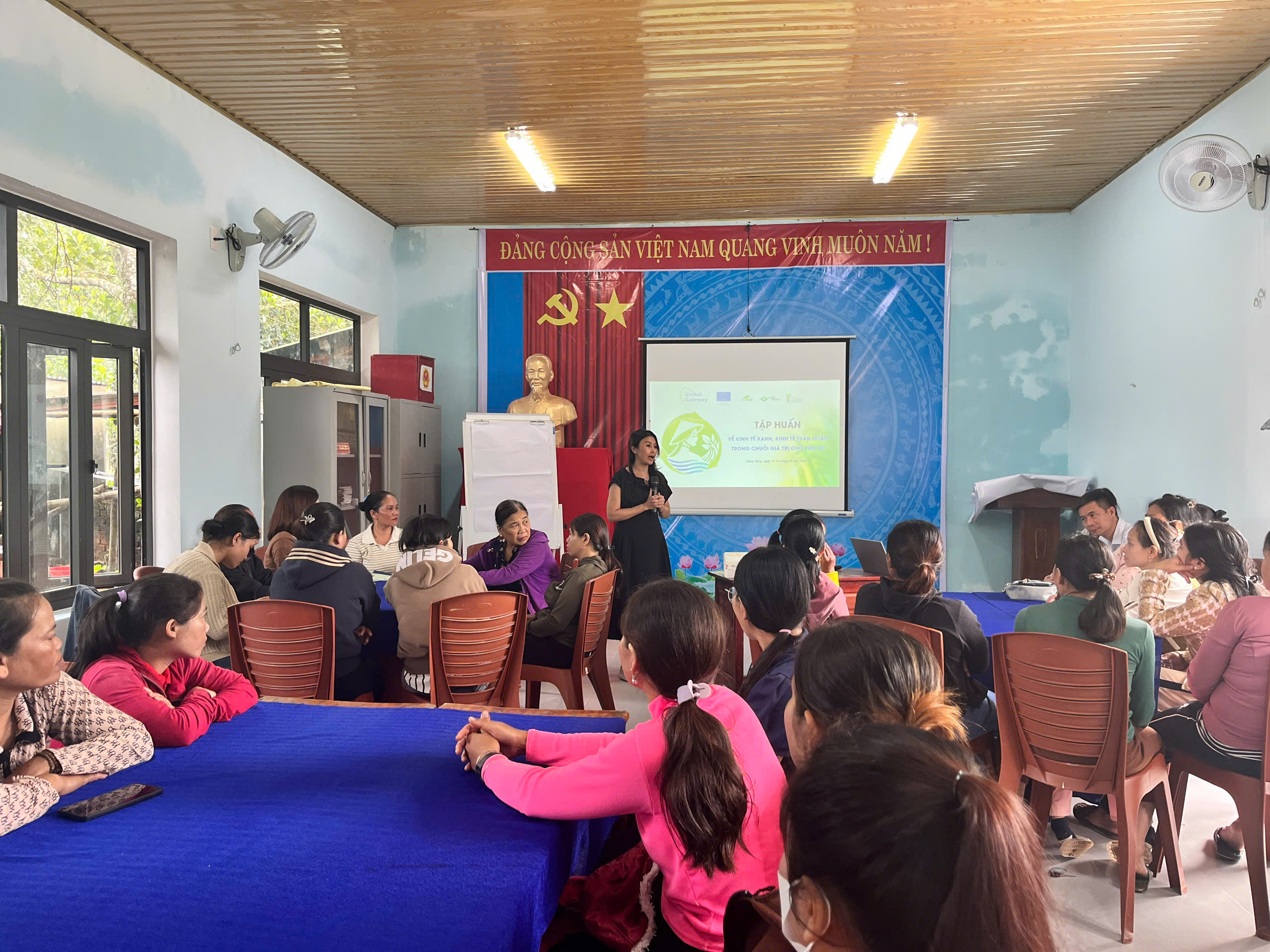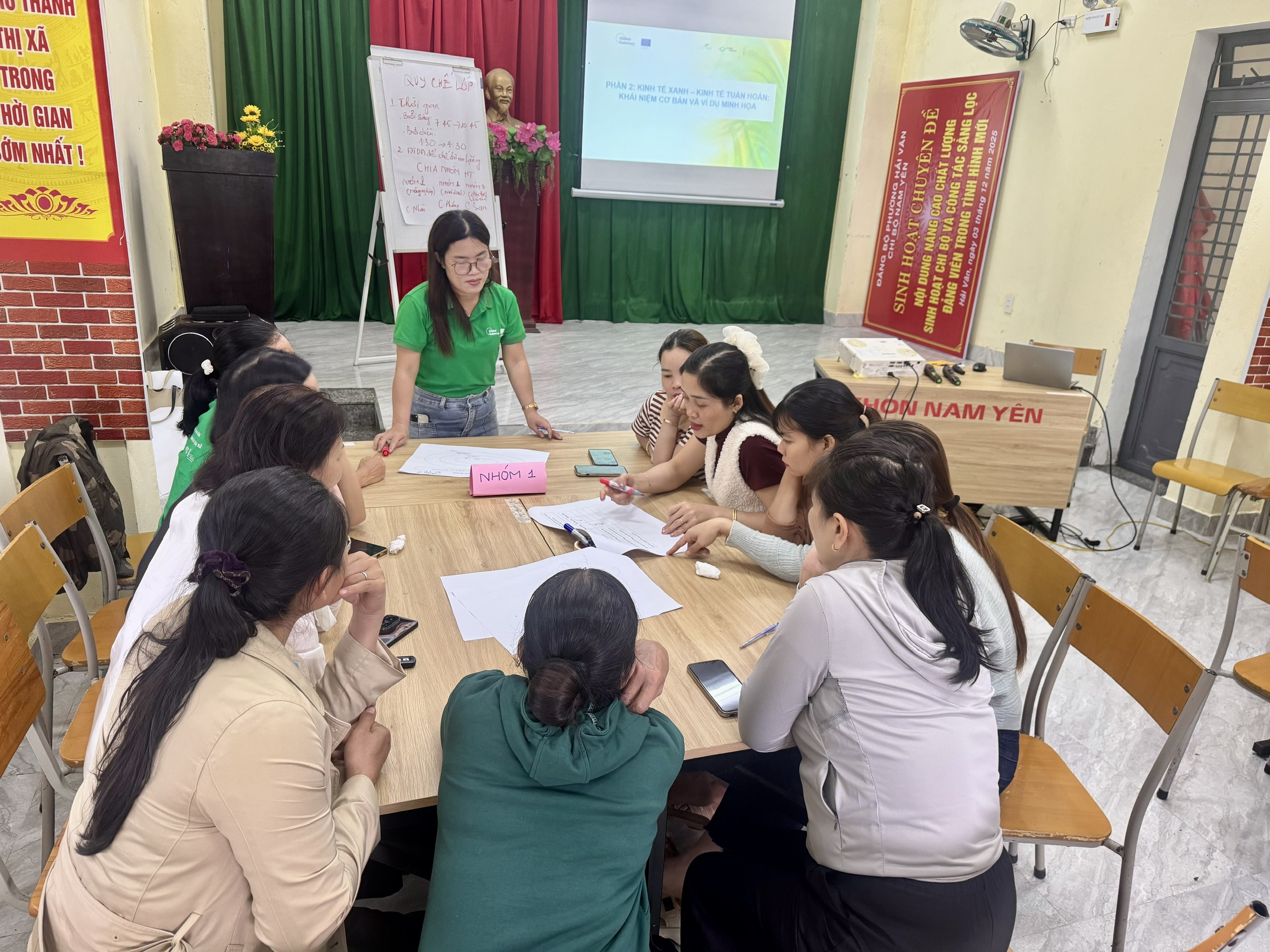
Da Nang, Vietnam – A total of 301 local women have successfully completed training courses on the Green and Circular Economy (GCE), delivered entirely by local community trainers within the project “Enabling women in Central Vietnam to improve their lives and protect the environment and natural resources by applying green and circular economy.”
The project is funded by the Delegation of the European Union to Vietnam, jointly implemented by GreenViet, Visible Impact, and CSRD.
This important milestone marks the successful completion of the project’s training phase, which empowered women to move beyond general awareness and toward practical application of GCE principles within their local economic models and value chains.
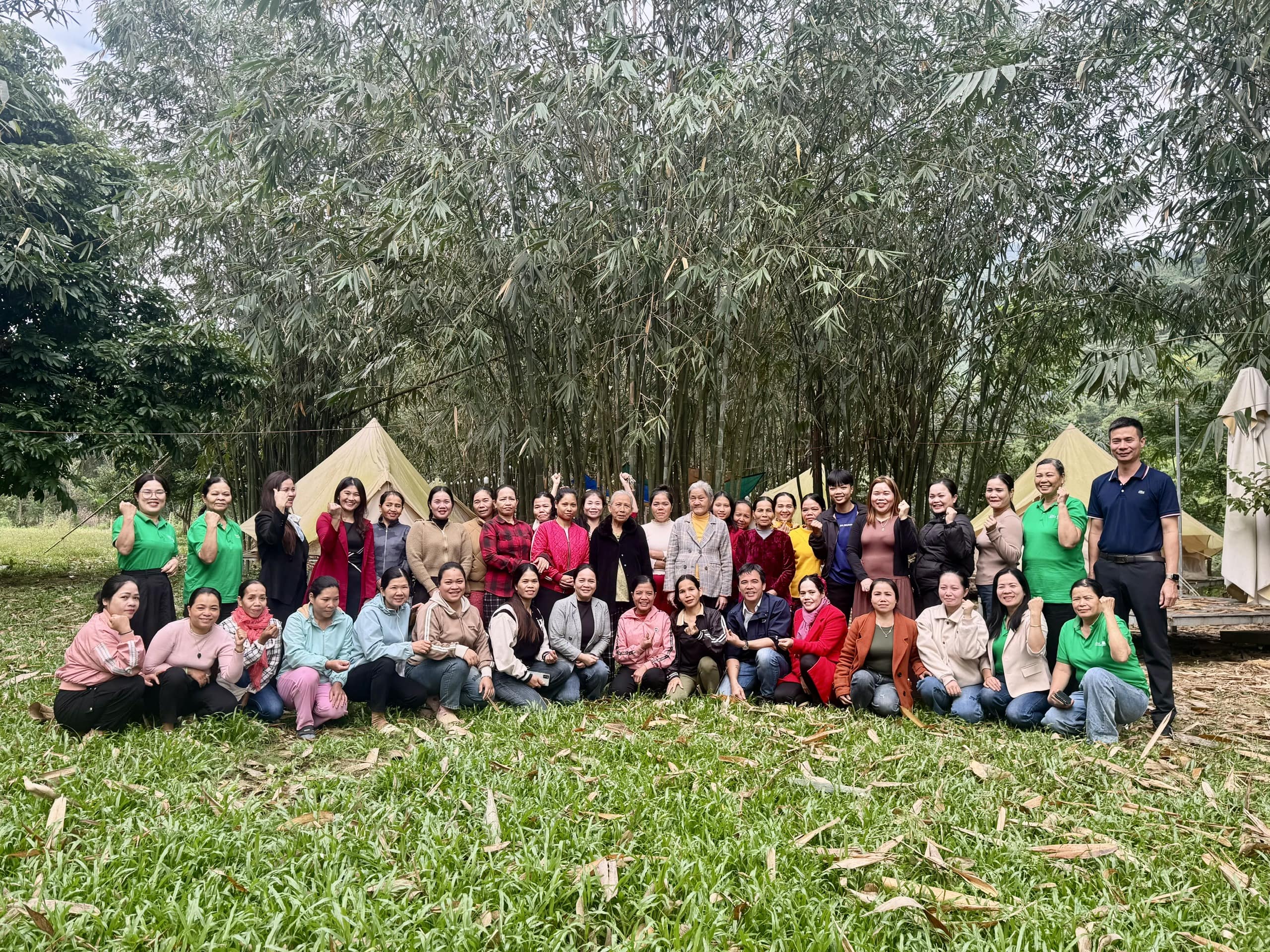
Local Ownership Driving Community Transformation
The training courses were meticulously designed to strengthen women’s understanding of GCE across local value chains, directly benefiting participants in three project areas: Sơn Trà Ward, Sông Vàng Commune, and Hải Vân Ward.
A total of 10 training courses were conducted between 3 November and 9 December 2025, each lasting 1.5 days, reaching 301 local women in total, ethnic minority groups included. The courses equipped participants with practical knowledge and tools to identify opportunities for greener and more circular practices within their existing economic activities.
Innovative Training Methodology: Enhancing Local Understanding
The success of the training was driven by a customised and participatory methodology tailored to local contexts:
- Local Trainers as Key Drivers: All trainers were women from the local communities and graduates of the project’s Training of Trainers (TOT) program. This ensured that language, cultural contexts, and real-life examples were highly relatable and effective for the learners. TOT trainers (GCE and gender experts), who also served as project consultants, provided close technical support to the three local trainers during the sessions, particularly when addressing complex onsite questions and situations.
- Optimal Class Size and Facilitation: Each class consisted of approximately 25–30 participants and was facilitated by three trainers, allowing for in-depth discussion and effective learning on the relatively new and complex topic of GCE.
- Sector-Specific Grouping: Participants were divided into three thematic groups—livestock, cultivation, and household/business activities—to encourage focused discussion on questions such as: Where are our current practices already circular or green, and where can improvements be made to apply green and circular economic principles?
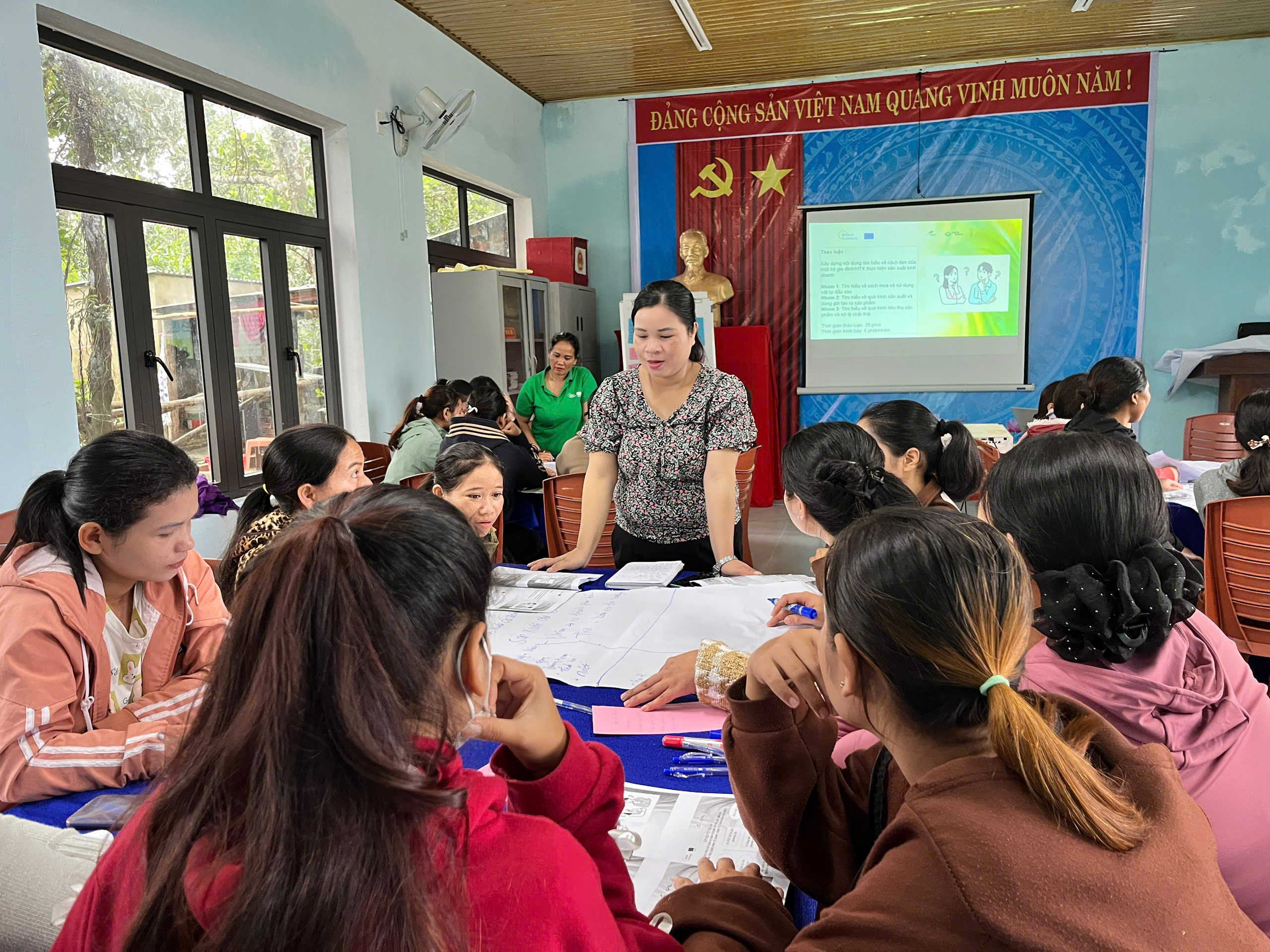
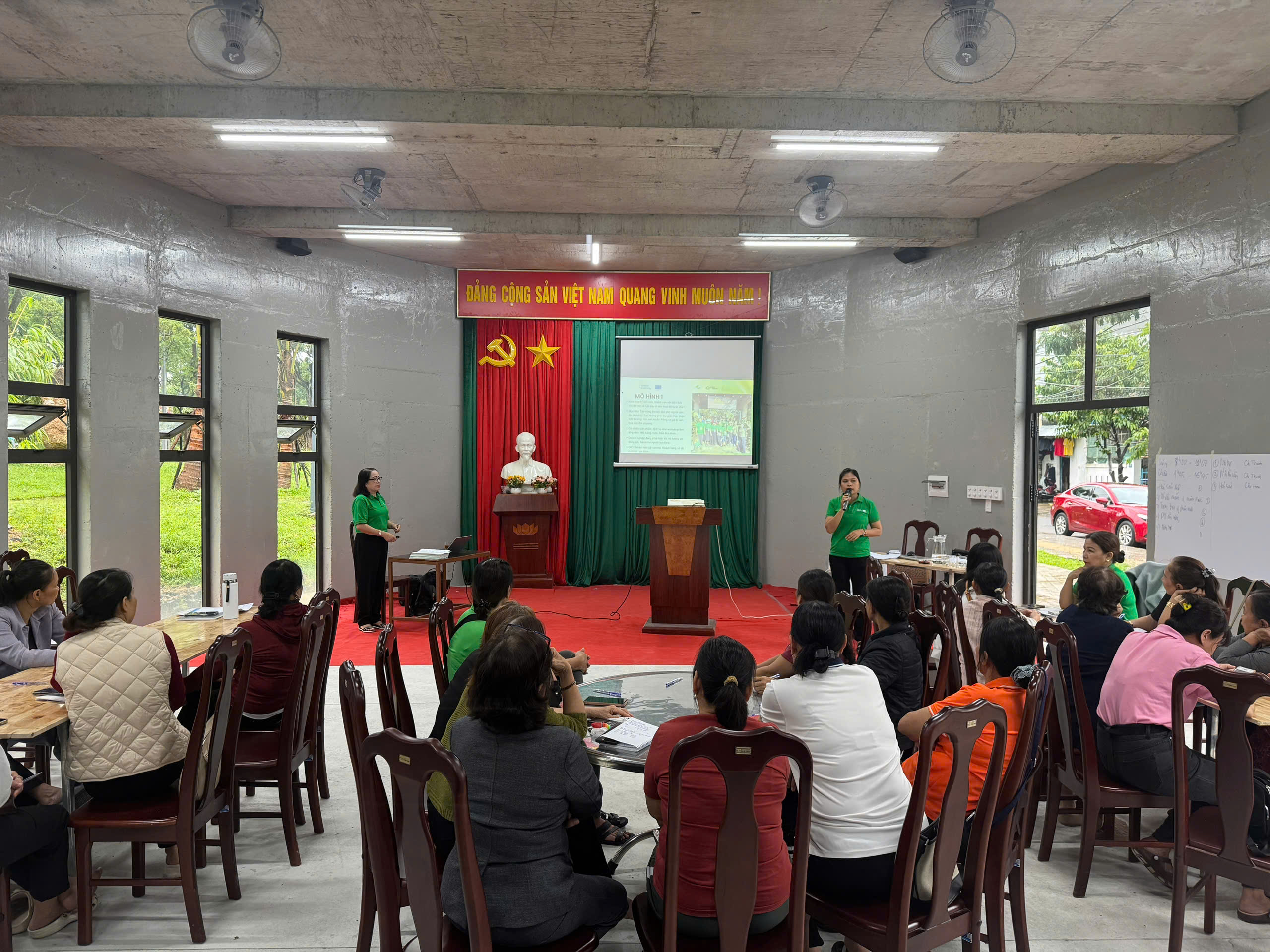
A training class at Song Vang commune
From Learners to Inspired Practitioners
The effectiveness of the training was clearly reflected in the enthusiasm and profound insights shared by participants:
Ms. Poloong Thị Trinh, a participant from Sông Vàng Commune, shared after the first course:
“At home, I already have economic activities, but thanks to this course, I see new ideas to make them more circular. Economically, this is beneficial because we can utilise the full lifecycle of waste in our activities. This course is highly useful.”
Ms. Lê Thị Lan, from the Xuân Thiều 2 Women’s Union in Hải Vân Ward, noted:
“Circularity means things go around and come back—nothing is lost. For example, using vegetable waste as fertilizer saves us money. It’s not complicated at all.”
Validating the Core Trainer Model
The positive shift in participants’ understanding validates the effectiveness and capability of the local core trainer model:
- Trainer Capacity: Most trainers confidently led sessions independently, successfully demystifying GCE concepts, including trainers from ethnic minority communities in Sông Vàng Commune.
- Immediate Action: Notably, trainers in Hải Vân Ward were inspired to organise a recyclable waste exchange event afterward, successfully integrating GCE knowledge-sharing with community mobilisation and engaging more than 200 women in the area.
Moving Forward
With the successful completion of these 10 community-based training courses, all 301 women are now well prepared to enter the next phase of the project. This phase will provide tailored technical and financial support to help participants implement practical GCE models, contributing to improved livelihoods and the protection of the environment and natural resources.